

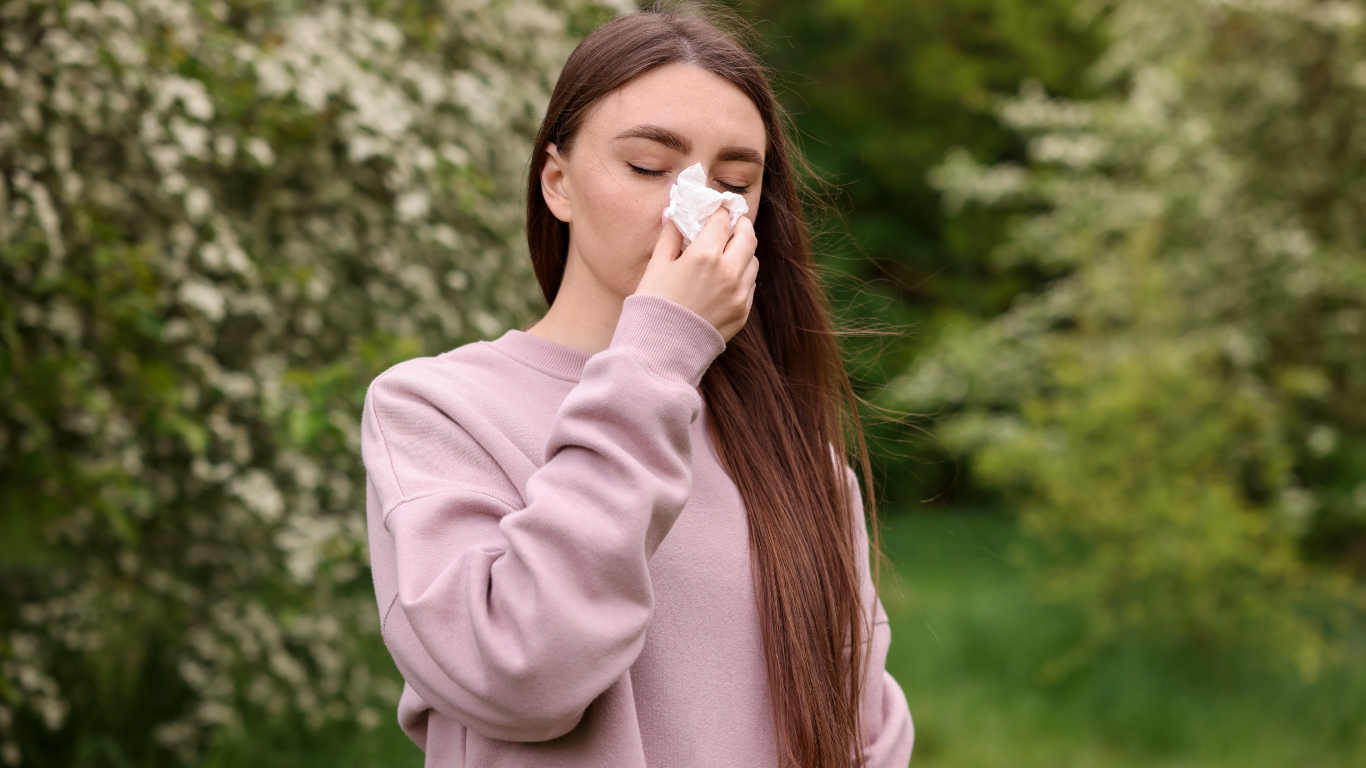
Increased pollen allergies: a growing reality and how to address it intelligently
Respiratory allergies are on the rise worldwide. This isn't just a perception; it's a documented phenomenon. The World Health Organization (WHO) warns that climate change and air pollution are amplifying the frequency, duration, and severity of pollen-related allergies.
Currently, between 20% and 30% of the world's population suffers from some type of allergy, and if the trend continues, it could affect more than 50% by 2050. Urban areas are the most impacted.
Pollen allergy is no longer a mild seasonal problem: it is a growing public health challenge.

What is causing the increase in allergies?
The WHO technical report explains that the increase in allergies is not solely due to greater detection, but to profound environmental changes.
Climate change: more pollen, for longer and more aggressive
The increase in CO₂ and the rise in temperatures are producing:
- Earlier start of flowering.
- Longer pollination seasons.
- Higher total pollen production.
- Increased allergenic potency.
The document itself points out that climate change favors longer seasons and a greater total pollen load in the environment.
In Mediterranean regions, exposure can occur even more than a month earlier than in previous decades.
Pollution: pollen becomes more inflammatory
Air pollution doesn't just irritate the respiratory system. It also alters pollen.
Fine particles (PM2.5) and ozone can:
- Alter the structure of the pollen.
- Increase its inflammatory capacity.
- Facilitate its penetration into the deep respiratory tract.
- Intensify the immune response.
The report even describes the phenomenon of "storm asthma," where pollen fragments into microscopic particles that penetrate deeper into the lungs, triggering acute respiratory crises.
What happens in the body when an allergy appears
Allergy is an exaggerated response of the immune system to substances that do not represent a real threat.
The problem isn't the pollen itself, but the immune dysregulation. The immune system releases histamine and activates an inflammatory cascade that produces:
- Repeated sneezing.
- Nasal congestion.
- Eye itching.
- Tearing.
- Hacking cough.
- Sensation of facial pressure.
In an environment where exposure is increasing, immune regulation becomes the central focus of the approach.
Beyond the antihistamine: regulate instead of block
For years, the standard treatment has been to block histamine using conventional antihistamines. While effective in relieving symptoms, many of these can cause drowsiness, lethargy, or decreased daily performance.
In a context where pollen exposure is more prolonged, relying exclusively on symptomatic blockers may not be the most balanced solution.
This is where the active ingredients of natural origin with modulating capacity come into play.
Natural extracts that help modulate the allergic response
Several compounds have demonstrated the ability to regulate the inflammatory response and histamine release without having a sedative effect:
- Vitamin C contributes to the normal function of the immune system and participates in the regulation of oxidative stress.
- Citrus bioflavonoids enhance its antioxidant action.
- Quercetin is known for its ability to stabilize mast cells and reduce excessive histamine release.
- Bromelain has anti-inflammatory properties.
- Zinc plays a role in immune regulation.
This type of approach does not abruptly block the symptom, but helps to modulate the exaggerated reaction of the immune system.
A formula like CNF Aller , which combines vitamins, bioflavonoids, enzymes and botanical extracts, is precisely aimed at this objective: reducing the intensity of symptoms while promoting a more balanced immune response.

It can be used both preventively, before peak pollination periods, and during the acute phase.
What does the WHO recommend in response to this trend?
The WHO proposes several lines of action:
- Improve pollen monitoring.
- Establish early warning systems.
- Educate the population about air quality.
- Integrating health into climate policies.
However, while these structural measures are being implemented, the population needs practical solutions to manage current symptoms.
Conclusion: intelligent adaptation in a changing environment
The rise in pollen allergies is not a passing trend. It is the result of profound environmental changes that are altering the way our immune system interacts with the environment.
While efforts are underway globally to limit the harmful effects of pollen through climate policies and pollution reduction, it is crucial to adopt effective and well-tolerated strategies at the individual level.
In addition to reducing environmental exposure, natural extracts with a regulatory action on the immune response represent an effective alternative to mitigate symptoms without the frequent side effects of many pharmaceutical antihistamines.
Regulating, balancing, and modulating can be a more sustainable strategy in a scenario where the allergy season no longer lasts a few weeks, but several months.


%20warns%20that%20climate%20change%20and%20air%20pollution%20are%20ampl...)
Leave a comment
This site is protected by hCaptcha and the hCaptcha Privacy Policy and Terms of Service apply.