

Article: Immunity is Security: Strengthen your immune system
Immunity is Security: Strengthen your immune system
THE IMMUNE SYSTEM
All living organisms, whether human, animal and/or plant, need for their subsistence and security " innate mechanisms " that protect them and keep them active and prepared to fight and cope with the various threats that constantly loom over us.
These “ innate mechanisms” are ours immune system .
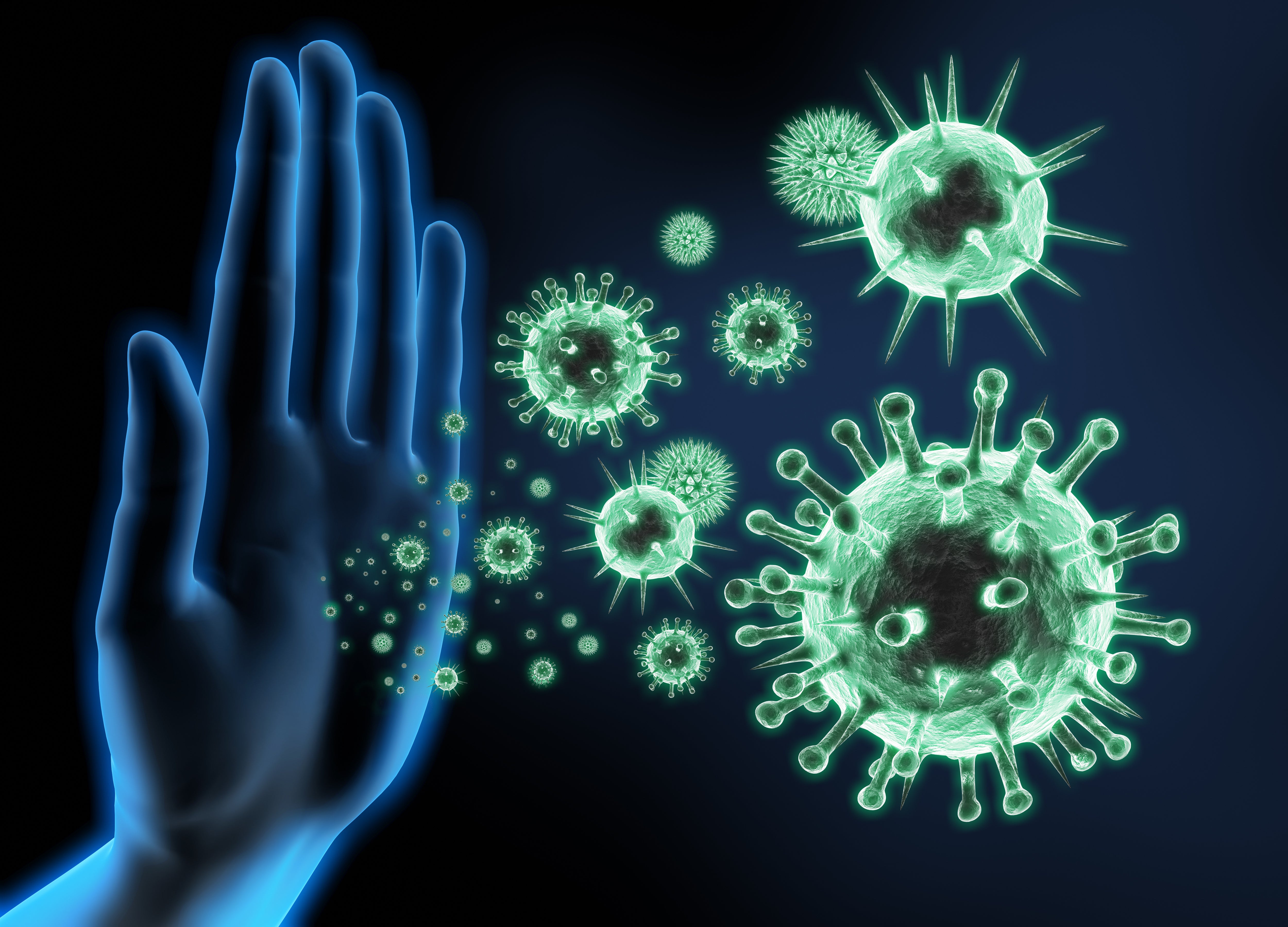
Humans live in environments where we are also accompanied by microscopic beings invisible and undetectable to the naked eye: microbes (pathogens or intruders). These pathogens appear in the form of viruses, bacteria, fungi, parasites, and other possible foreign substances.
He immune system It is a complex set of biological elements and processes that are activated within our body to maintain a proper internal balance – homeostasis. In this way, when any type of aggression occurs, whether external ( antigens) and/or contaminants or radiation) or internal (cancerous cells), the immune system It recognizes it and reacts immediately by attacking it. This defensive action is commonly called a “immune response” .

DEFENSES
The “immune response” It has three levels of defense:
1. The physical or mechanical barriers → They form the first line of defense against infections (i.e., the skin, lungs, cough, sneezing, tears, and urine).
- Chemical barriers → Secretion of antimicrobial peptides by the skin and respiratory tract, enzymes contained in saliva, tears, breast milk itself, vaginal secretions, semen containing defensins and zinc, as well as gastric acid and peptidases from the stomach.
- Biological barriers → Within the gastrointestinal and genitourinary tracts would be the intestinal microbiota and alterations in the environmental conditions (i.e., modification of pH or levels of available iron).
2. The innate immunity or natural It is the body's dominant defense system, which will activate if the pathogen has breached the first level of defense. This system mounts an immediate, though not specific, response, as it reacts to pathogens in a generic way.
When, at the cellular level, a danger is detected by the threat of a pathogen, it is immediately activated to neutralize it without depending on the type of antigen (pathogen).
Innate immunity has two types of protective barriers :
- Humoral barriers → Fever, inflammation and the complement system (biochemical cascade that attacks the surfaces of foreign cells, complementing the destruction of pathogens initiated by antibodies).
- Cell barriers → White blood cells or leukocytes, which include phagocytes (cells that circulate in the bloodstream whose mission is to capture and digest pathogens).
Among them we highlight neutrophils, macrophages, dendritic cells, mast cells, basophils, eosinophils and NK (Natural Killer) cells.
3. The acquired immunity or adaptive : This immunity is only found in jawed vertebrates.
Once the “immune response innate” If the previous one is overwhelmed by the action or virulence of these pathogens, the following immediately comes into play: “immune response acquired” with more sophisticated and interconnected defense mechanisms. This does depend on the type of antigen (pathogen).
It also has a special class of cells to fight against antigens, with white blood cells or leukocytes called lymphocytes: cytotoxic T lymphocytes, helper T lymphocytes, T and ε cells, antibodies and B lymphocytes.
In addition to everything mentioned above, the immune system It is made up of other soluble molecules generated by other cells that are in circulation, such as the molecules of the so-called "complement system".
This is a group of plasma molecules whose functions are to enhance the inflammatory response, facilitate phagocytosis, and direct cell lysis, including apoptosis. Among them, we highlight C-reactive protein, cytokines, chemokines, interferons, antimicrobial peptides, and immune antibodies.
MEMORY
He immune system Over time, it adapts to recognize specific pathogens much more effectively and stores them in its "immunological memory," so that in subsequent secondary infections with those same pathogens, it exerts a immune response faster and more effective.
IMMUNODEFICIENCY: YOUR OWN BODY ATTACKS YOUR ORGANS AND TISSUES
He immune system It can itself cause several diseases because, if it is immunocompromised because it has a immunodeficiency (is less active than normal), will cause the promotion of recurrent infections (those that reappear after a previous healing period) with the consequent risk to life.
The immunodeficiencies They can have a genetic origin, be caused by drugs, or be due to an acquired infection, as is the case with AIDS caused by the HIV retrovirus. Another of the immunodeficiencies is the Common variable immunodeficiency (CVID) , caused by low levels of serum immunoglobulins (antibodies) and by a greater predisposition to infectious processes.
He immune system It can also be affected by different disorders such as diseases autoimmune or cancer. When the one himself immune system It becomes hyperactive and attacks the body's own normal tissues as if they were pathogens or intruders; we would then be talking about diseases. autoimmune. Currently, up to eighty different pathologies are cataloged; among these diseases we highlight rheumatoid arthritis, thyroiditis, type 1 diabetes mellitus, systemic lupus erythematosus, multiple sclerosis, celiac disease, etc.
Therefore, the immune system It is our protective and security system, and to the extent that it is healthy and in perfect condition, we will be more predisposed to be able to fight any external aggression from pathogens or foreign molecules (antigens).
As the father of modern microbiology used to say, Louis Pasteur (French chemist and bacteriologist), “ the germ is nothing, the terrain is everything” . This phrase perfectly summarizes everything said so far, hence we must maintain an optimal “state of immune competence” that allows us to face any external aggression.
IMMUNOSENSCENCE: THE AGING OF THE IMMUNE SYSTEM
In this article we want to make explicit mention of the following scientific reference that deals with the aging processes of immune system : the immunosenescence , directly related to an increased susceptibility to infections and cancer.
Published in the prestigious scientific journal Nature Immunology , We highlight the study carried out by a team of Spanish and English researchers, Alessio Lanna et al.
This study identifies the aging mechanisms of immune system and the reactivation process itself. This allows for the development of new therapies that promote a better immune response to infectious processes and even against some types of cancer, especially among older people.

The study consisted of analyzing how the T lymphocytes , as a defense mechanism within the Acquired or adaptive immunity ages and loses its protective and defensive capabilities over time, consequently leading to an increase in infections and diseases.
There had long been a suspicion that there was a very close relationship between metabolism, aging and immunity, but the mechanisms of interaction between them were unknown.
This research study concluded that the function of aged white blood cells or T lymphocytes can be restored by blocking certain molecules involved in the cell deterioration process, called (p38 MAPK, AMPK and TAB1).
This opens the door to reactivating a immune system deteriorated and especially the ability to slow the spread of diseases and even fight them.
COVID-19: PREPARE YOUR RESPONSE TO THE VIRUS
Referring to the current exceptional global situation we are experiencing due to the COVID-19 pandemic, we must prepare our immune system to face this critical situation in the best possible conditions.
 It is important to keep in mind that " the defining factor regarding the consequences or severity of a viral agent is the resistance of the host, since if it depended absolutely on the virus, the consequences and levels of severity would be completely uncontrollable ."
Hence the emphasis of all professionals in the field on the profound importance of strengthening our immune system so that, in case of contracting the virus, our body's response is much more effective and powerful, as it is already prepared for the attack.
NUTRITION AND SUPPLEMENTATION AS ESSENTIAL FACTORS
In this regard, we must affirm that nutrition is a determining component in the development and maintenance of the immune response.
Epidemiological studies link nutritional deficiencies to immune imbalances and the consequent increased risk of infections and the development of various diseases. [ Clinical Nutrition in Medicine ]
Through nutrition, we obtain proteins (amino acids), lipids (fats), carbohydrates (sugars), and other nutrients necessary for the proper functioning of our bodies. We obtain these nutrients through food, and with them, we get the energy to repair our tissues and regulate metabolic processes.
From here on we will talk about “ immunonutrients ”, which will have a direct and favorable influence on the immune system .

Similarly, there is evidence about how certain micronutrients such as iron, copper, zinc, selenium and vitamins such as A, D, and E, as well as Glutamine plays a fundamental role as a supplement in the maintenance and strengthening of immune system .
Water-soluble vitamins such as Vitamin C or Ascorbic Acid and the B vitamins (B1 or Thiamine, B2 or Riboflavin, B3 or Niacin, B5 or Pantothenic Acid, B6 or Pyridoxine, B8 or Biotin, B9 or Folic Acid and B12 or Cyanocobalamin), represent a fundamental group of nutrients since they perform a multitude of regulatory functions of the immune response of our body.
All these “ immunonutrients ” are provided to our body through the intake of a varied and balanced nutritional diet, but often this diet turns out to be inadequate. nutritional deficiencies This is either because we don't eat what we should, because the food doesn't contain enough nutrients, or because we nourish ourselves inadequately and generate inadequate states, either from excess or deficiency.
Therefore, abnormal situations will arise in our body that will need to be supplemented with an extra and balanced supply of these nutrients.

Leave a comment
This site is protected by hCaptcha and the hCaptcha Privacy Policy and Terms of Service apply.